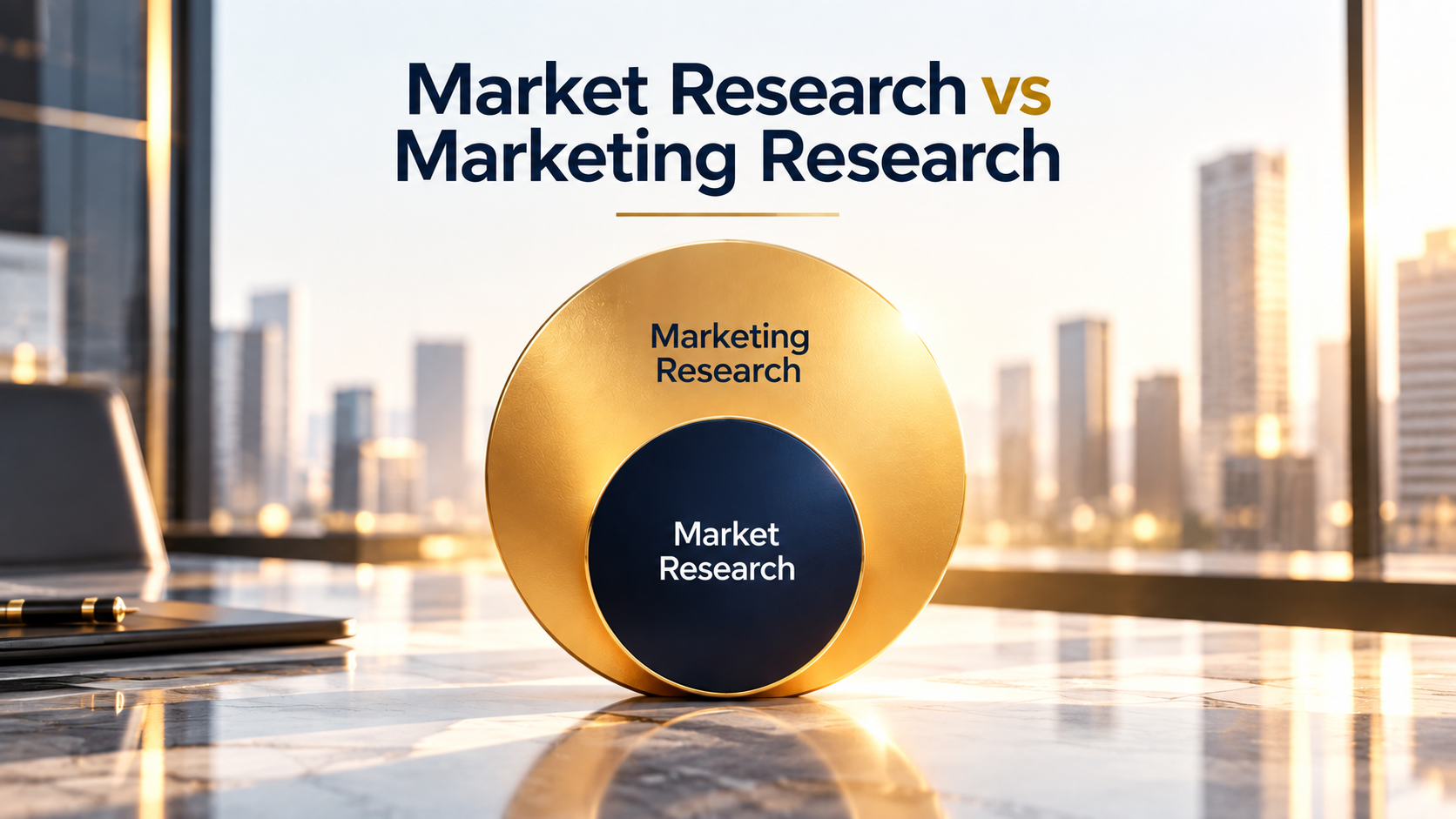
Market research and marketing research are closely related but serve different purposes. Market research focuses on understanding the market, including customers, competitors and market conditions, while marketing research has a broader scope that informs decisions about products, pricing, positioning, distribution and marketing activities. Understanding the distinction helps businesses identify what information they need and undertake the appropriate research to support informed decision-making.
Written: 11 February 2025
Research strengthens business decision-making by helping enterprises understand the environments in which they operate, the customers they seek to serve and the effectiveness of their marketing activities. However, market research and marketing research are often used interchangeably even though they serve different purposes.
This distinction is important because the type of information a business requires should determine the research it undertakes.
Cant, Strydom, Jooste and du Plessis (2006) distinguish the two by explaining that market research focuses specifically on obtaining information about markets, including their size, nature, structure and characteristics, while marketing research has a broader scope, incorporating market research alongside research into areas such as products, distribution, advertising, customer service and positioning.
Understanding the distinction enables businesses to ask the right questions and gather information appropriate to the decisions they need to make.
Market Research: Understanding the Market
Market research helps an enterprise understand the market in which it operates or intends to operate.
It can provide insight into market size and characteristics, customer needs and behaviour, competitors, industry developments and other external conditions affecting the business. This information can help enterprises identify opportunities and threats, understand potential customers and assess whether there is sufficient demand for a particular product or service.
Importantly, research should begin with clarity about what the business needs to know. The information required will influence the research method, sources, scope and resources needed.
Market research therefore contributes to the wider research and diagnosis required for informed strategic decision-making. Before making assumptions about a market, enterprises need evidence about the environment in which they intend to compete.
Marketing Research: Informing Marketing Decisions
Marketing research is broader.
It can investigate questions relating to products and services, pricing, distribution, positioning, customer experience, communication and the effectiveness of marketing activities. Market research may therefore form part of marketing research, but the two concepts are not identical.
For example, an enterprise may conduct market research to understand the characteristics, needs and behaviour of a particular customer segment. It may then undertake marketing research to determine how effectively its product, pricing, positioning, distribution or promotional activities are responding to that market.
The relationship between the two is therefore complementary.
Market research helps the enterprise understand the market. Marketing research helps the enterprise make and evaluate decisions about how it engages that market.
Both contribute to evidence-informed decision-making and should continue as the business and its environment evolve. Customer behaviour changes, competitors respond, technologies develop and market conditions shift. Research enables enterprises to test assumptions, identify changes and refine decisions as new information becomes available.
For businesses, the important question is therefore not simply whether research should be undertaken, but what information is required, why it is required and which form of research is appropriate to the decision being made.
Understanding this distinction enables enterprises to use research more deliberately — strengthening their understanding of markets while improving the quality of the marketing decisions through which they seek to create and communicate value.