Insights

Research and thought leadership informing policy, institutional practice and development

Goshen Insights brings together research, analysis and thought leadership on the factors that shape institutional, enterprise and development outcomes. We examine strategy, governance, leadership , institutional capacity and the wider systems through which policies, programmes and development priorities are translated into practice.

Scroll

Research & Insights

What Is Strategy?

Advisory Services

What Is Strategy?

06 October 2026

Strategy is more than planning or setting objectives. It involves direction, deliberate choices, positioning, trade-offs, resource allocation and alignment among organisational activities and capabilities. Drawing on the perspectives of Chandler, Andrews, Mintzberg, Grant and Porter, this article considers the multidimensional nature of strategy and how these perspectives contribute to a practical understanding of strategic decision-making.
Strategy Is Not the Same as Operational Efficiency

Advisory Services

Strategy Is Not the Same as Operational Efficiency

06 October 2026

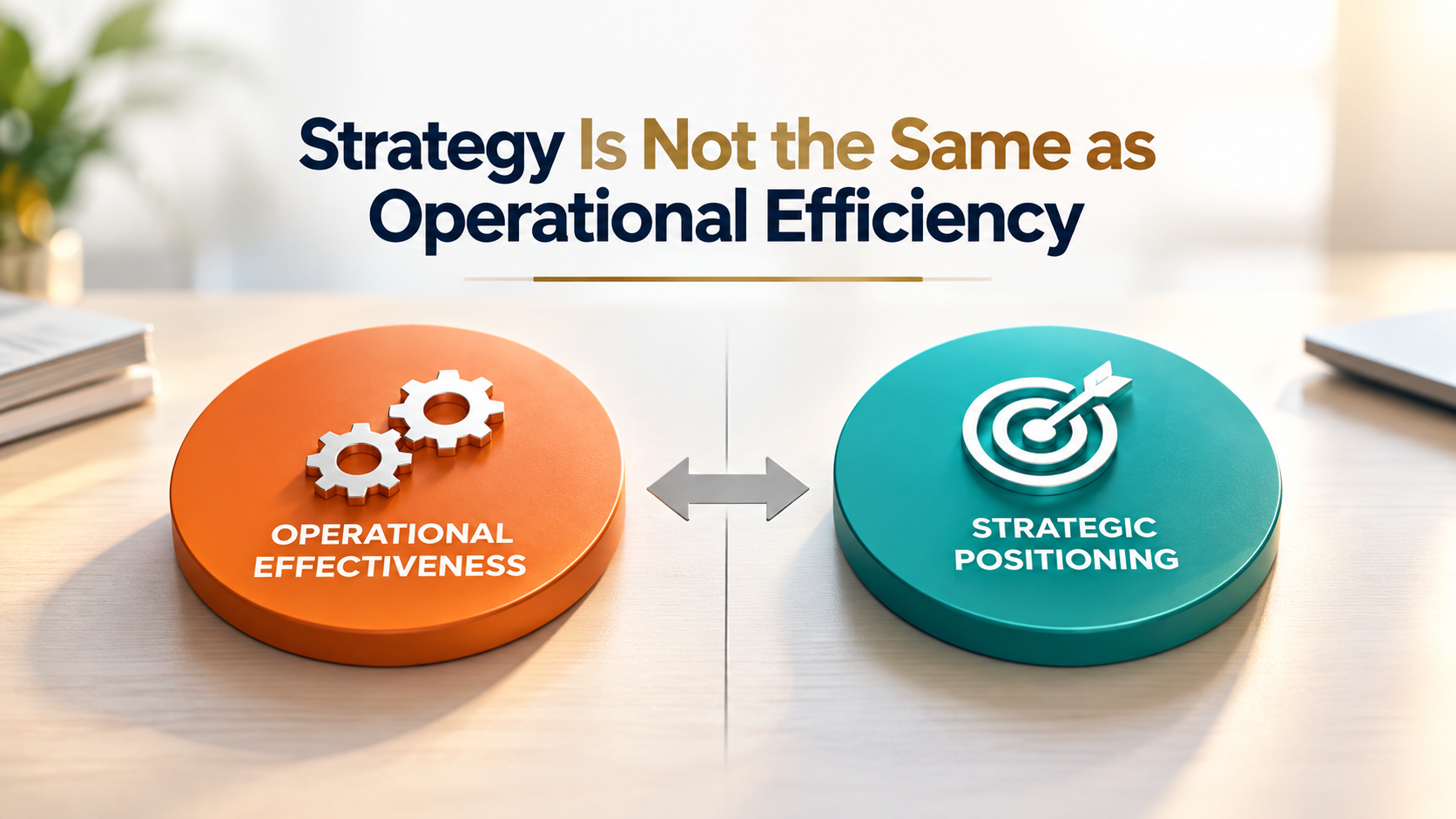
Operational effectiveness and strategy both contribute to business performance, but they serve different purposes. Operational effectiveness focuses on performing activities better through improvements in productivity, quality and efficiency, while strategic positioning requires distinctive choices about how an enterprise will create and deliver value. This article examines why businesses need both operational capability and strategic differentiation to strengthen performance and sustain competitive advantage.

Research & Diagnosis in Strategy Formation

Advisory Services

Research & Diagnosis in Strategy Formation

06 October 2026

Research and diagnosis provide the evidence and insight required to understand an organisation’s internal capabilities, external environment and the strategic issues requiring attention. This article examines how research, analysis and diagnosis work together to identify what matters strategically and establish an informed basis for strategic choices.

Robust Strategic Plans Require Explicit and Tested Strategic Assumptions

Advisory Services

Robust Strategic Plans Require Explicit and Tested Strategic Assumptions

06 October 2026

Strategic plans are built on assumptions about markets, stakeholders, organisational capabilities and future conditions. Making these assumptions explicit and testing them against relevant evidence strengthens strategic choices and reduces the risk of building strategy on unchecked beliefs. Because conditions continue to change, critical assumptions must also be monitored and revisited during implementation, combining research and evidence with leadership judgement to support informed and adaptive strategic decision-making.

Industry Analysis: Strengthening Business Strategy and Competitive Advantage

Advisory Services

Industry Analysis: Strengthening Business Strategy and Competitive Advantage

05 October 2026

Industry analysis enables businesses to understand the competitive forces, market conditions and external changes shaping their operating environment. This article explores the distinction between industry analysis and market research, examines key analytical frameworks, and shows how research and industry knowledge can strengthen analytical capability, strategic decision-making, adaptation and competitive advantage.

Market Research vs Marketing Research: Understanding the Interplay Between Two Distinct Concepts

Advisory Services

Market Research vs Marketing Research: Understanding the Interplay Between Two Distinct Concepts

05 October 2026

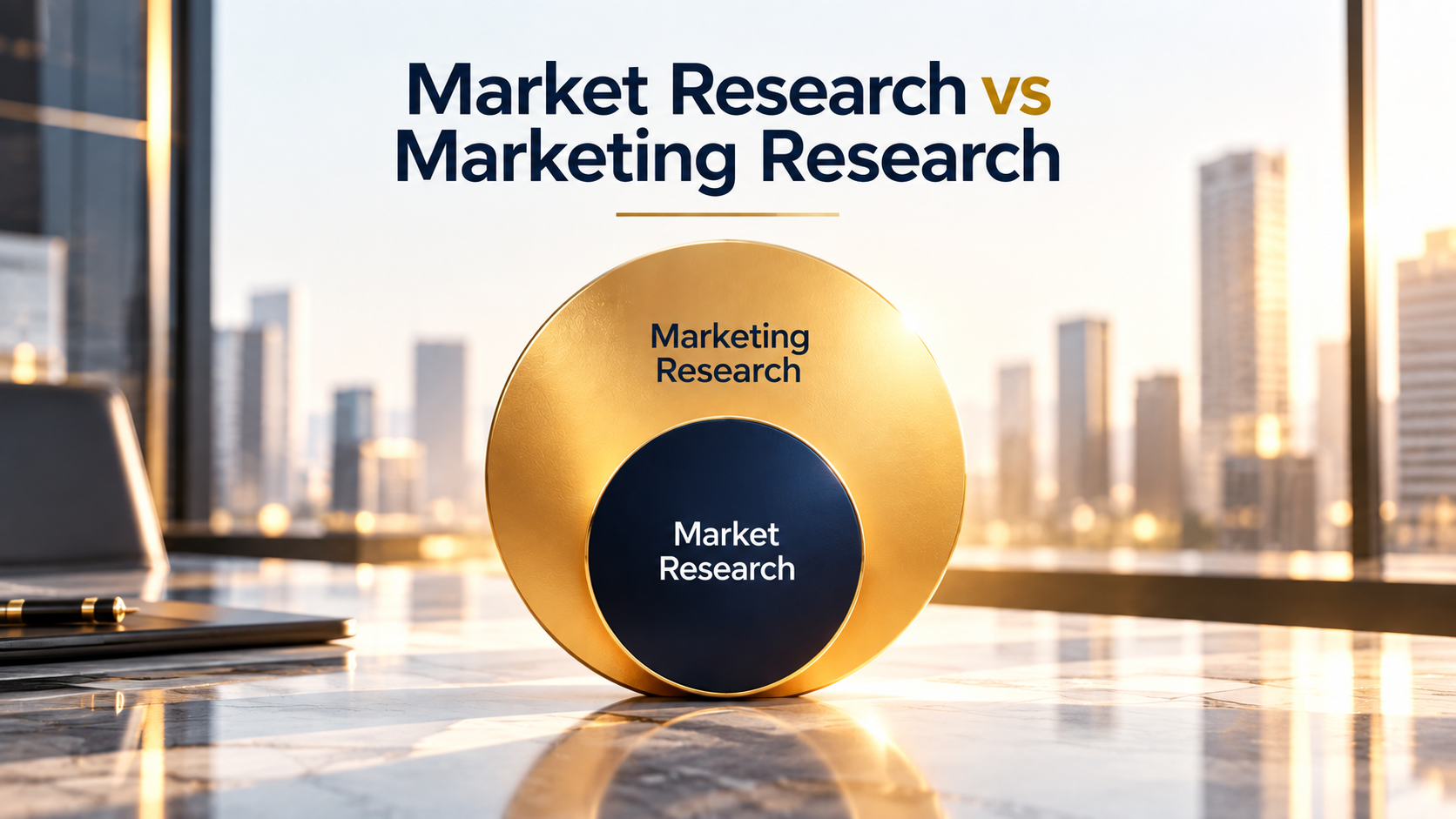
Market research and marketing research are closely related but serve different purposes. Market research focuses on understanding the market, including customers, competitors and market conditions, while marketing research has a broader scope that informs decisions about products, pricing, positioning, distribution and marketing activities. Understanding the distinction helps businesses identify what information they need and undertake the appropriate research to support informed decision-making.

 Understanding the Difference Between Marketing and Advertising

Advisory Services

Understanding the Difference Between Marketing and Advertising

05 October 2026

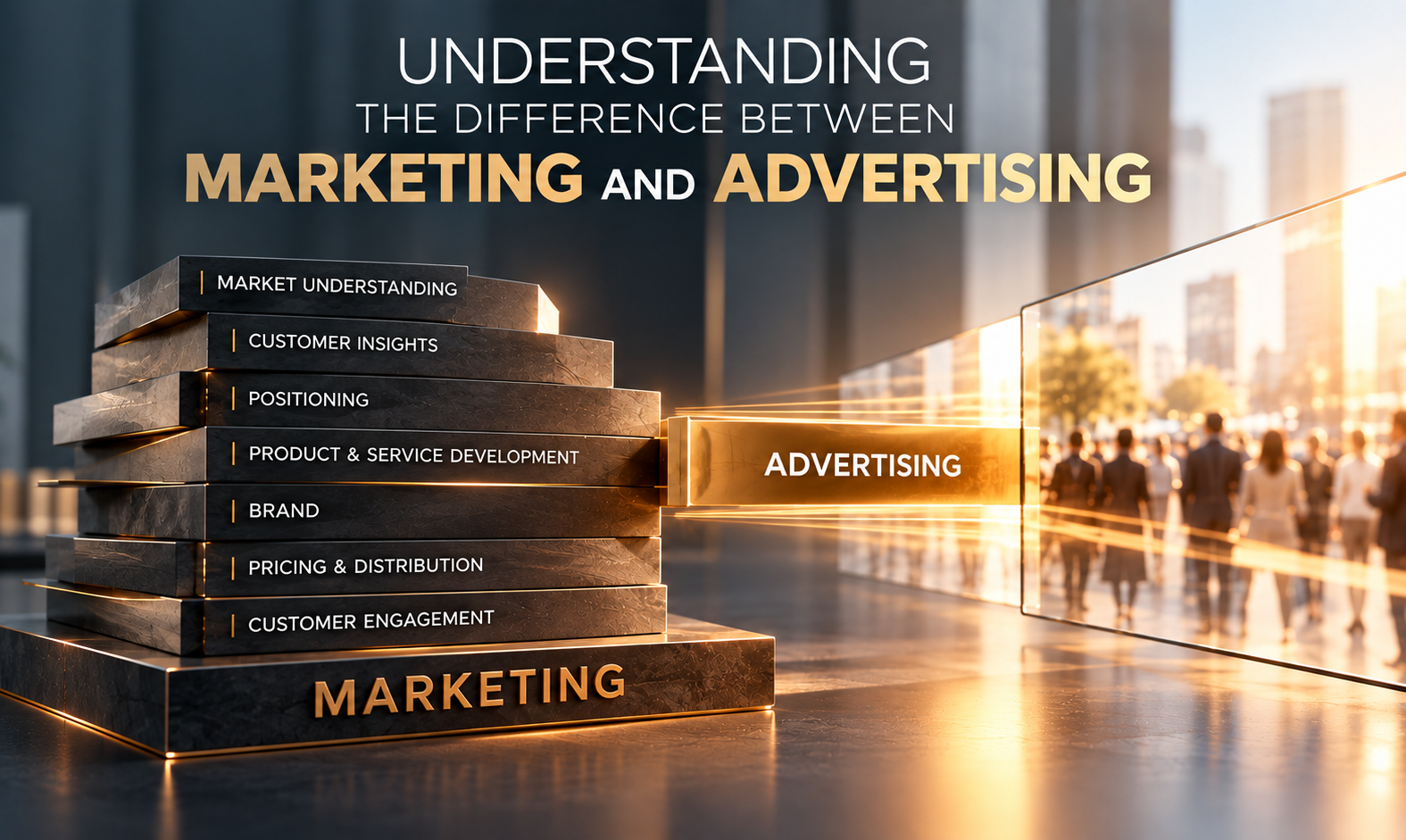
Marketing and advertising are closely connected, but they perform different functions in enterprise development. Marketing provides the broader framework through which a business understands its customers and markets, develops and positions its offering, creates and communicates value, and builds customer relationships. Advertising is one component of this broader marketing system, using paid communication to promote an offering, build awareness and influence customer action. Understanding this distinction helps businesses align advertising expenditure with clear market understanding, positioning and marketing objectives.

The Convergence of Strategy & Leadership: Essential for Successful Start-ups & SMMEs

Advisory Services

The Convergence of Strategy & Leadership: Essential for Successful Start-ups & SMMEs

05 October 2026

Successful start-ups and SMMEs require the convergence of sound strategy and capable leadership. Strategy provides direction and establishes priorities, while leadership mobilises the people, resources and capabilities required for execution. As enterprises develop, aligning strategy, leadership and organisational capability strengthens resilience, sustainable growth and the ability to create value within the wider communities and ecosystems in which they operate.

Collaboration as a Catalyst for Innovation and Enterprise Growth

Advisory Services

Collaboration as a Catalyst for Innovation and Enterprise Growth

05 October 2026

Collaboration can strengthen enterprise innovation and growth by connecting businesses to complementary knowledge, capabilities, technology, markets and expertise. Its value, however, depends on strategic alignment: enterprises must understand why collaboration is required, what capability is needed, which partners can provide complementary value and how the relationship should be structured. Purposeful collaboration can therefore extend enterprise capability and strengthen innovation, competitiveness and sustainable growth.

Each Phase of the Business Life Cycle Demands a Distinct Support Approach

Advisory Services

Each Phase of the Business Life Cycle Demands a Distinct Support Approach

22 August 2026

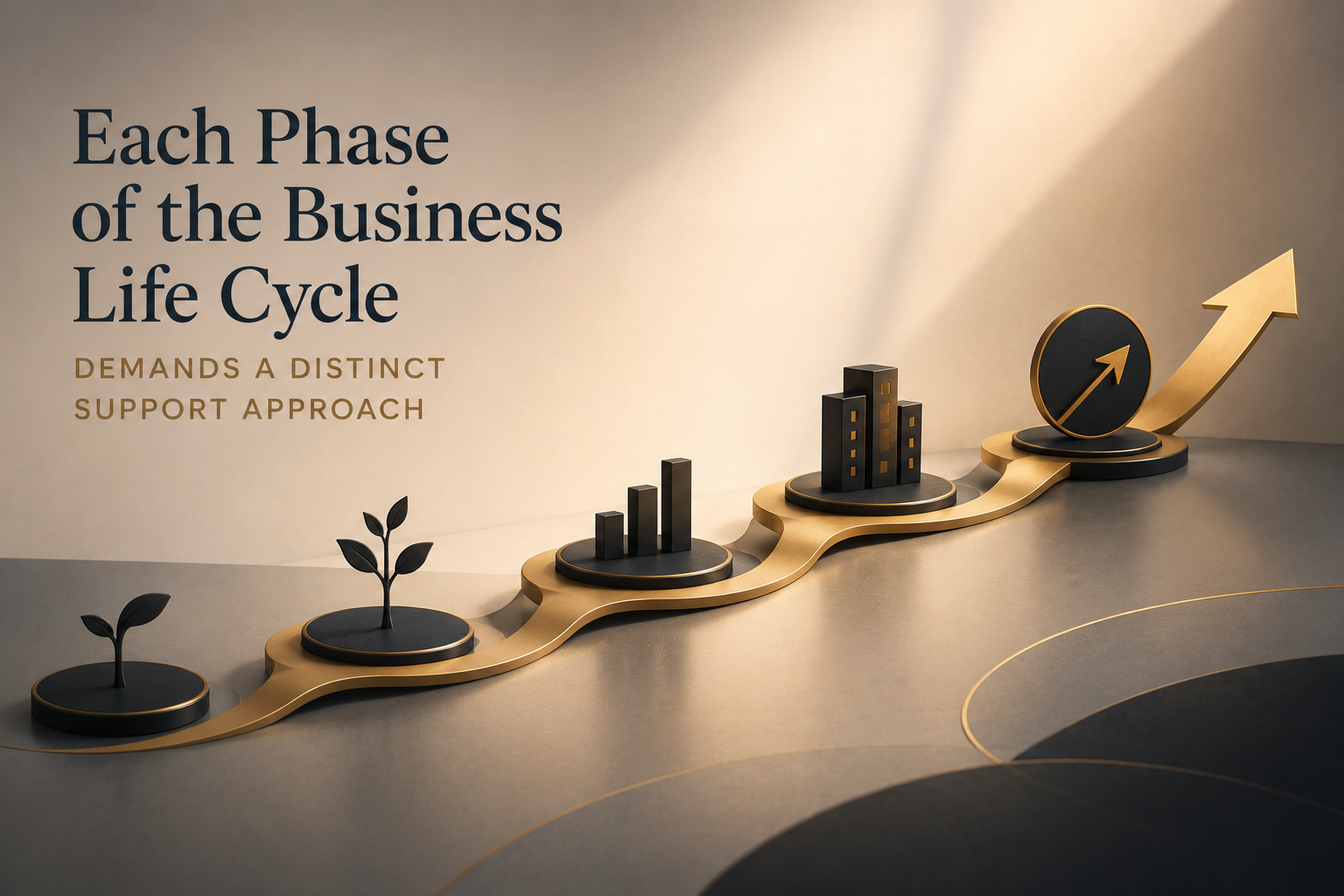
Businesses at different stages of development face different strategic, operational and capability requirements. This article examines why enterprise support should move beyond generic interventions towards stage-responsive support that reflects the needs of start-up, growing, established, mature and declining businesses.

The Impact of Business Liquidation on Companies and Their Stakeholder Networks

Advisory Services

The Impact of Business Liquidation on Companies and Their Stakeholder Networks

22 August 2026

Business liquidation extends beyond the closure of an individual company. Its effects can spread across employees, suppliers, creditors, customers, families and communities, demonstrating the interconnected nature of enterprise ecosystems. This article examines these wider consequences and highlights why enterprise sustainability and resilience matter not only to individual businesses, but also to the networks of stakeholders that depend on them.

Business Incubators

Advisory Services

Business Incubators

20 August 2026

Business incubators support early-stage, growth-oriented enterprises by providing structured access to business guidance, technical support, mentorship, finance and other resources that strengthen their ability to become sustainable and independent. However, incubation is most effective when entrepreneurs enter with clarity about their business, a validated business model, market understanding and readiness to execute. Choosing the right incubator therefore requires entrepreneurs to assess both their own readiness and how well the programme aligns with their business goals and growth needs.